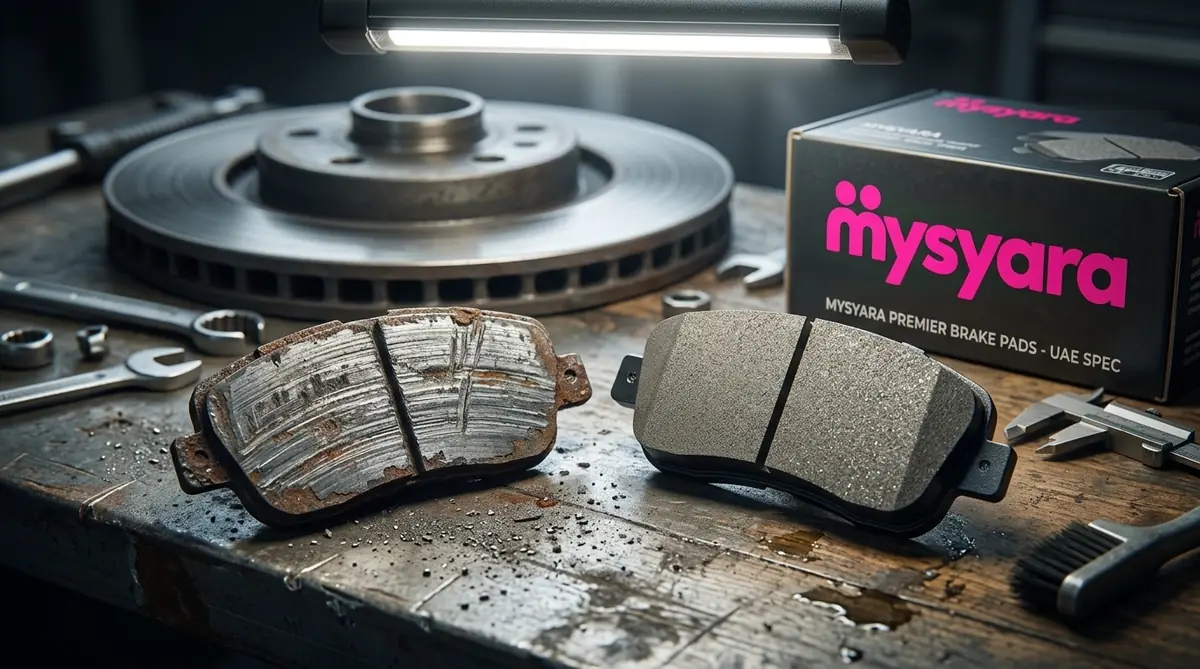
Why brake pad replacement is a workshop job
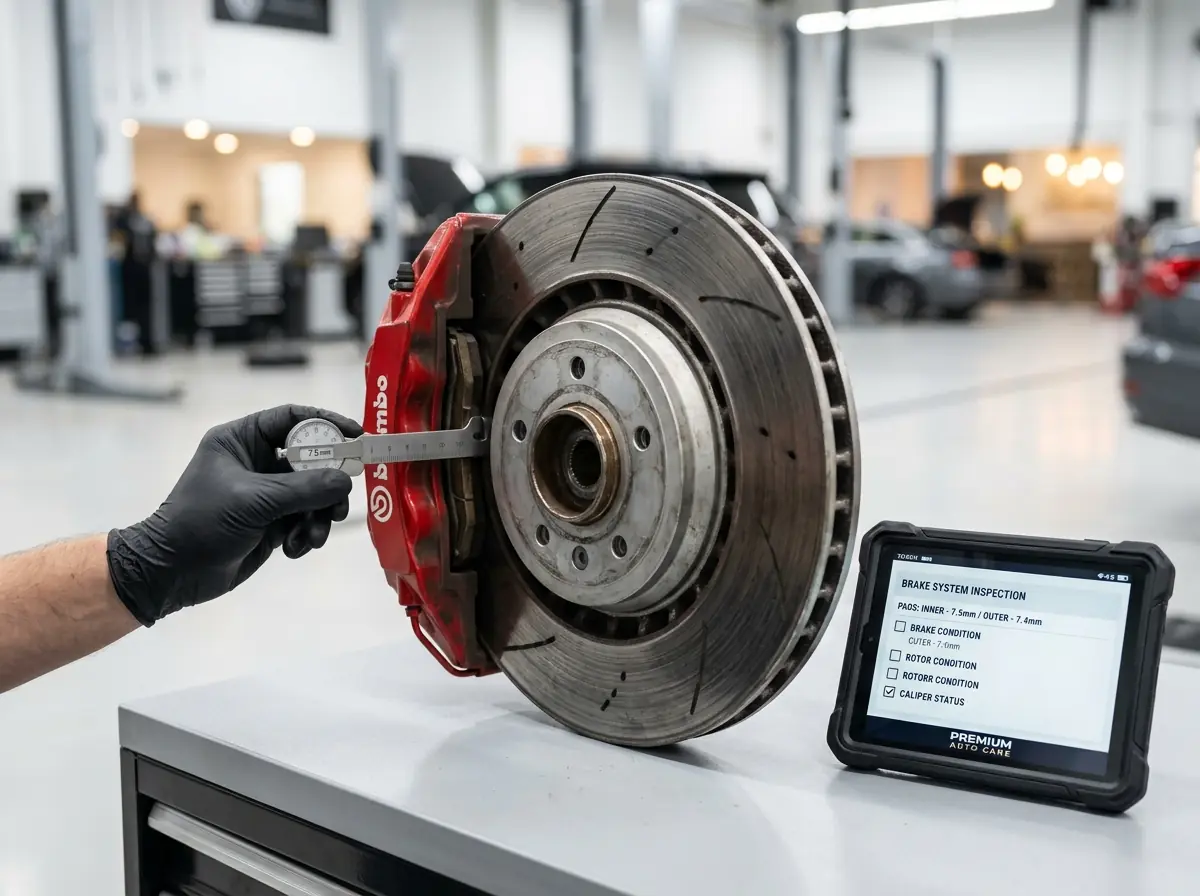
Replacing brake pads is not complicated, but it is safety-critical, and that distinction matters. The technician needs the car on a lift to inspect the caliper, measure disc thickness, clean the slide pins and verify that nothing else in the brake system is about to give. Skipping those checks and bolting in new pads on top of a seized caliper or a disc that is below minimum thickness gets you pads that wear out in a third of the distance and brakes that do not stop the car properly.
That is why brake pad replacement at MySyara is done at the workshop. The workshop has the lift, the correct pad specifications for your make, and the equipment to bed the pads in before the car is handed back. With the car raised, the technician also checks the discs, calipers and brake fluid, the parts you cannot judge from the outside, so a worn disc or a seized caliper is caught while it is still a small job.
What the price depends on
The price for brake pads in the UAE is tier-based. Every car on the road gets classified by its make, model and engine, roughly: compact/sedan/coupe as one group, SUVs as another, with four tiers from everyday daily drivers up to high-performance and luxury models.
The cheapest front pad replacement is AED 325 (Tier 1 sedan or compact, such as a Toyota Yaris, Nissan Sunny or Honda City). The same job on a Tier 4 car, a BMW 7 Series or a Lexus LX, runs to AED 775 for a sedan and AED 825 for a large SUV. Rear pads start from AED 300.
That spread is real and it reflects the parts: a Tier 1 sedan takes a straightforward pad that fits a hundred different cars, while a Tier 4 luxury or performance car often takes a manufacturer-specified ceramic or slotted compound that costs considerably more. The inspection confirms your car’s tier and quotes the right number before any work starts. When you’re ready, book a brake service and the confirmed price comes back before a technician is assigned.